


RP Grand - Open World Game
4.5596.00 Reviews
App Specs
- Version
- 99
- Updated On
- License
- Free
- Downloads
- 10,000,000+
- Developer
- Grand Games AV
- Categories
- Role Playing
- Platform
- Android, iOS
Screenshots

 Analysis by AppCompare
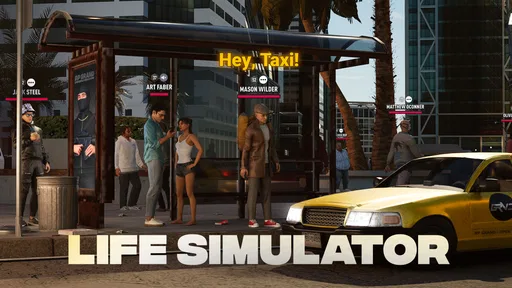
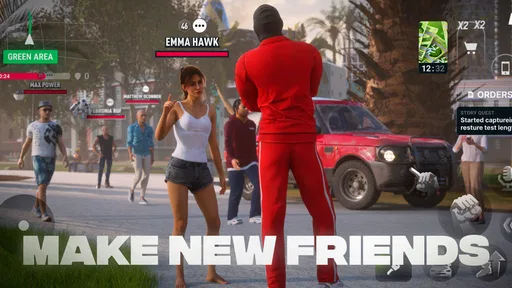
RP Grand - Open World Game is the kind of mobile role-playing game that makes its first impression through movement rather than menus. I enter a city built around cars, gangs, police activity, and interaction with other players, then gradually work out how I want to behave inside it. The appeal is not simply driving around or collecting fights; it is the feeling that an ordinary trip can turn into a small story.
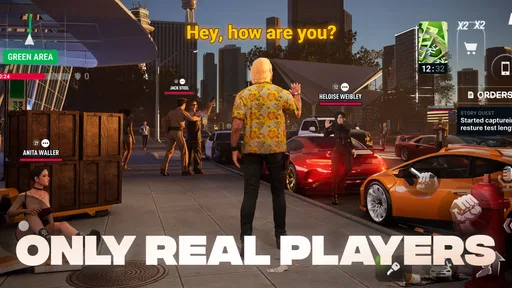
After spending time with it, I would describe the game as a social open-world playground with action at its center. It is free to install, developed by Grand Games AV, and aimed at Teen players. Its store summary points toward online roleplay with real players, and that distinction matters: this is not best approached as a purely solo campaign where every moment is carefully scripted for me.
The game has built a sizeable audience, with over ten million installs and a 4.4 average from around forty-eight thousand ratings. Those figures suggest that the central idea connects with many mobile players, but they do not remove the need to understand the experience before starting. The most enjoyable sessions come from accepting that progress is partly about learning the city, making choices, and finding a rhythm that suits me.
What to expect when you enter the city
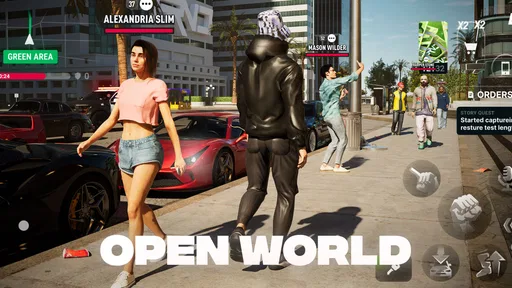
My first expectation would be a flexible urban sandbox rather than a tightly guided adventure. Cars are a major part of the experience, while gangs and police create the tension that keeps the streets from feeling like an empty driving map. The online roleplay element adds another layer because other people can affect the atmosphere, pace, and direction of a session.
That combination makes the game more unpredictable than a conventional mobile action title. In a standard mission-based game, I usually know what the next objective is and why I am doing it. Here, the satisfaction often comes from linking smaller actions together: getting around efficiently, deciding whether to avoid trouble, responding when trouble finds me, and learning which situations are worth pursuing.
I would not install it expecting a quiet, fully controlled experience. The presence of real players means that the world can feel active, but it can also feel less consistent than a single-player game. Some sessions may be immediately entertaining, while others may require patience before anything meaningful develops. That trade-off is central to the game rather than a flaw that can be completely removed.
The role-playing label is also worth interpreting correctly. I see it less as a traditional fantasy progression system and more as playing a part inside a modern criminal-city setting. The fun comes from how I move through the world and react to its pressure. Players who enjoy inventing their own small objectives will probably get more from it than players who need a clear chain of story chapters.
Worth Reading Before You Choose

EA SPORTS FC Mobile 26 Is a Bigger Football Game, but It Takes Time

Flipboard Shows What News Apps Must Do Beyond the Feed

Switching to Android Auto Means Rethinking Your Driving Routine

Google Calendar Makes a Crowded Week Easier to Manage

Ludo King Makes the Most of the Minutes Between Plans

Baby Panda World Brings Quick Play to Modern Phones, but Its Game Library Feels Busy
The best mindset for a first session
I recommend treating the opening session as orientation, not a test of skill. Instead of immediately chasing every confrontation, I would spend a little time learning how the vehicle responds, how movement feels in crowded areas, and how the surrounding activity changes when police or gangs become involved. That early patience makes later decisions easier.
A useful personal rule is to choose one purpose for each short session. I might focus on getting comfortable with driving, exploring a particular part of the city, or looking for a controlled interaction with the online world. This prevents the first hour from becoming a blur of random movement and makes it easier to recognize genuine progress.
The game is particularly suited to players who like emergent moments. If I enjoy taking a simple plan and adapting when another player, a police response, or a street encounter changes the situation, the open-world format has room to surprise me. If I prefer a game that always tells me exactly where to go, the looser structure may feel frustrating.
Setting up a useful starting routine
RP Grand supports Android devices running version 8.0 or later, so I would check that basic requirement before downloading. The game is free to start, but it includes optional purchases ranging from $0.49 to $99.99 per item. For a first-time player, my advice is simple: begin without treating purchases as part of the tutorial. Learn what the normal loop feels like before deciding whether anything extra is worthwhile.
That approach is important in a game built around an open world. Early confusion can make optional items look more necessary than they really are. I would first establish whether I enjoy the driving, the street activity, and the online roleplay atmosphere. If those foundations do not appeal to me, spending money will not solve the underlying mismatch.
Once inside, I would keep the first setup deliberately practical. I would adjust to the control layout, test how quickly I can stop or turn, and notice how much attention the game demands while I am moving through the city. In an action game with vehicles and police pressure, control familiarity is more valuable than rushing toward the most dramatic encounter.
I would also make a mental note of how other players influence my decisions. Are they creating situations I want to join, or do I prefer to keep distance and explore? That answer tells me more about whether the game fits than any single early reward. Online roleplay can be social without requiring me to treat every nearby player as a teammate or opponent.
How to avoid wasting the opening minutes
One common mistake is to drive continuously without forming a goal. The map may be open, but open does not mean every direction is equally useful. I get more from the city when I decide whether I am scouting, escaping, seeking action, or simply learning routes. Even a temporary goal gives the session shape.
Another mistake is assuming that the most aggressive option is automatically the most rewarding. Police and gang activity are there to create pressure, not necessarily to dictate every move. Sometimes the better choice is to observe, reposition, or leave before a messy situation turns into an unplanned loss of time.
I also recommend keeping the first play period short enough to remember what caused each problem. If I change controls, chase several encounters, and spend currency all at once, it becomes difficult to know what actually improved the experience. A measured start gives me a clearer sense of the game’s strengths and friction points.
Finding the first meaningful success
For me, the first meaningful success is not simply reaching a new street. It is completing a small plan without losing control of the situation. A realistic example would be starting with a short drive, choosing whether to approach or avoid a dangerous area, reacting to police attention, and ending the trip with a clear understanding of what I would do differently next time.
This kind of success is reassuring because it teaches several systems together. I learn how the vehicle behaves, how quickly a situation can escalate, and how much freedom I have to disengage. It also turns the open world from a collection of visual details into a place I can navigate with intention.
My preferred early workflow would look like this:
I begin by moving through a familiar stretch of the city rather than searching for the biggest confrontation.
I choose one interaction or risk and watch how the surrounding activity responds.
I leave enough room to recover instead of continuing until every problem overlaps.
I use the result to choose the next session’s focus, whether that means driving practice, exploration, or more active roleplay.
This is not a rigid mission guide. It is a way to create structure when the game does not always provide it directly. The advantage is that I start noticing patterns. I become better at judging when a police encounter is manageable, when a gang-related situation is worth approaching, and when another player’s presence is likely to make the scene more interesting or more chaotic.
Why small victories matter here
In a traditional role-playing game, the first success is often represented by a quest reward or a level increase. In this game, I find the more useful reward is confidence. Once I know how to move, pause, escape, and re-enter the action, the city becomes less intimidating. That confidence is what lets the online roleplay layer become enjoyable instead of overwhelming.
A practical tip is to remember routes, not just destinations. Knowing how to reach a busy area is helpful, but knowing how to leave it gives me more control. I pay attention to turns, open stretches, and places where I can slow down before trouble arrives. This makes driving a strategic tool rather than a way to passively travel between events.
Another non-obvious advantage of short, deliberate trips is that they help separate skill problems from connection or player-behavior problems. If I struggle while alone, I probably need more practice with movement or controls. If everything works until a crowded online scene develops, the challenge may be the social environment rather than my basic handling.
Where new players usually get confused
The biggest source of confusion is the difference between an open-world game and a conventional progression game. I may enter expecting a constant stream of obvious objectives, but the roleplay format leaves more responsibility with me. The city provides ingredients; I have to decide what kind of session I want to cook from them.
It is also easy to mistake activity for progress. A busy street, a chase, or a confrontation can be exciting without moving me toward a personal goal. I try to ask myself what I am learning from the moment. If the answer is nothing, leaving can be the smarter choice. Open-world freedom is most useful when it supports decisions rather than replacing them.
Online interaction creates another uncertainty. A real player may not behave in the way I expect, and a scene that looks like an opportunity may become a distraction. I would avoid assuming that every encounter needs an immediate response. Watching for a moment, keeping a safe distance, and choosing when to commit are all legitimate forms of roleplay.
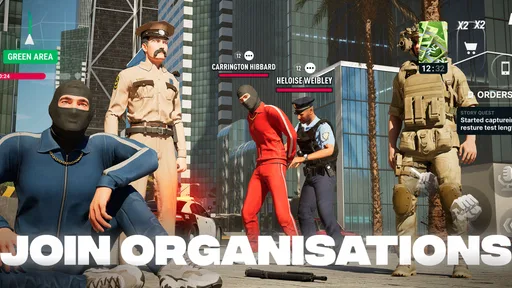
The presence of gangs and police can also tempt new players into escalating too quickly. I find it more useful to treat them as pressure systems. They make movement and decision-making matter, but I do not need to provoke every available threat. A controlled retreat can be more satisfying than a dramatic failure if it teaches me how the city reacts.
Handling purchases without losing the point
The free entry point is a strength, especially for anyone unsure whether online urban roleplay is a good fit. At the same time, the in-app purchase range is broad enough that I would be cautious about buying anything during the first session. The game’s core question is whether I enjoy its world and interactions, not whether an item can make the beginning feel faster.
I would only consider a purchase after identifying a specific annoyance or a clear personal goal. If I cannot explain what the item changes in my routine, I would wait. This is particularly useful for younger players, since the Teen content rating does not make optional spending disappear. A parent or guardian may also want to discuss purchases before allowing regular play.
The game is a poor match for someone who wants a completely predictable, offline-style experience, a tightly written campaign, or a role-playing system built around carefully explained character statistics. It may also disappoint players who dislike driving as a central activity or who become irritated when other people make the world less orderly.
By contrast, I would recommend trying it if the idea of creating your own street-level stories sounds appealing. It is also a good candidate for short sessions with a clear intention: explore, practice, observe online behavior, or take a calculated risk. The game’s flexibility is most enjoyable when I bring a little direction of my own.
Choosing the next step after the first session
After I have completed a few controlled outings, I would choose one of three paths. The first is exploration, where I learn the city and improve my movement. The second is action, where I deliberately seek more involvement with gangs and police. The third is social roleplay, where I pay closer attention to how real players shape the scene. Separating these paths helps me understand what I actually enjoy.
This also gives the game a fair comparison with other mobile role-playing options. A story-led RPG is usually better when I want authored characters, predictable objectives, and a clear ending. A racing game is better when driving precision is the entire point. A conventional action game may be better when I want immediate combat without negotiating the unpredictability of an online city. RP Grand earns its place by combining driving, urban danger, and player-created situations.
Its limitation is the same as its identity: the experience depends heavily on how much freedom I enjoy. The game cannot guarantee that every visit will produce a memorable story, because memorable stories need room for awkward, quiet, or chaotic moments. I have to be willing to create momentum instead of waiting for a perfect sequence to appear.
The current version is 99, and the game’s Teen rating makes its intended audience clear. I would still approach it according to personal tolerance for online unpredictability and action-heavy situations. The large player base can make the city feel lively, but it also means the experience may vary depending on who happens to be active around me.
My final recommendation is to install it with modest expectations and a simple first objective. Learn the vehicle, complete one controlled street outing, and pay attention to whether the online world adds excitement or stress. If the idea of turning a drive into an improvised story appeals to me, the game has enough room to reward continued play. If I need every goal explained and every outcome controlled, another kind of role-playing game will probably serve me better.
For a friend trying it for the first time, I would say this: do not measure the game only by its opening chaos. Give yourself time to understand how movement, police pressure, gangs, and real-player interaction fit together. Once I stopped treating the city like a checklist and started using it as a place for small decisions, the experience became much more convincing.
That is the real reason I would recommend RP Grand - Open World Game selectively rather than universally. It is not a replacement for every mobile RPG, but it offers a specific kind of freedom: I can drive, take risks, avoid trouble, and shape a session around the people and situations I encounter. For players who want that combination, the free starting point makes it easy to find out without committing first.
Pros
- Large open world with plenty of locations to explore
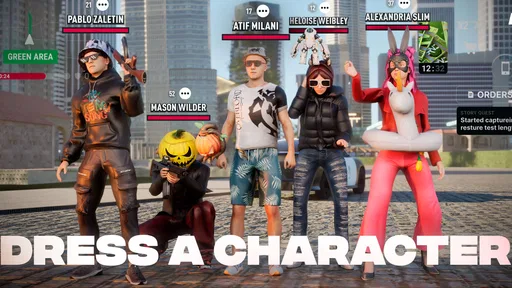
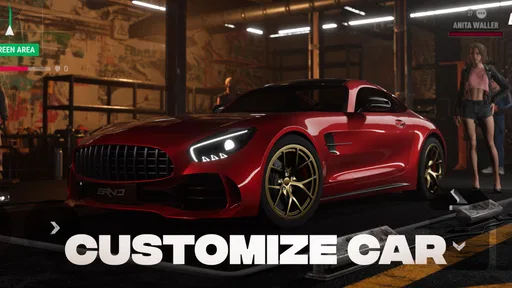
- Wide range of vehicles and customization options
- Role-playing systems encourage different play styles
- Online activities create opportunities for social interaction
- Regular progression gives players goals beyond free roaming
Cons
- Performance may vary considerably across older devices
- The open world can feel empty outside busy areas
- Some features may require extended grinding to unlock
- Online play can be affected by unstable connections
- In-app purchases may speed up progression for paying players
FAQs for RP Grand - Open World Game
What is RP Grand - Open World Game?
RP Grand is an open-world role-playing game focused on multiplayer interaction, exploration, missions, vehicles, and character progression. Players can create or develop a character, move through a large city environment, earn money, purchase items, and participate in different activities. The experience is designed around freedom and role-play, although the available features and gameplay depth may vary depending on the device and game version.
Can I play RP Grand offline, or does it require an internet connection?
An internet connection is generally required for RP Grand because its main experience is based on online interaction, shared game worlds, account progress, and multiplayer activities. Offline access may be limited or unavailable, and some menus or features might not work correctly without a stable connection. Using Wi-Fi is recommended, especially when downloading updates or playing for long periods.
What devices are compatible with RP Grand?
Compatibility depends on the operating system, device model, available storage, and hardware performance. Because RP Grand features a large open world and online gameplay, older phones may experience longer loading times, reduced graphics quality, overheating, or occasional frame-rate drops. Before downloading, check the official store listing for the current Android or iOS requirements and make sure sufficient free space is available.
Does RP Grand include in-app purchases or advertisements?
RP Grand may include optional in-app purchases, advertisements, or other monetization features depending on the platform and version available in your region. Purchases can potentially provide virtual currency, cosmetic items, upgrades, or convenience features, but players should review the store information before spending money. If children use the device, parental controls and purchase restrictions are strongly recommended.
Is RP Grand suitable for children and younger players?
Parents should review the official age rating and privacy information before allowing younger players to install RP Grand. Open-world multiplayer games can include communication with strangers, competitive behavior, virtual purchases, and content that may not be appropriate for every age group. It is advisable to use parental controls, limit chat or social features when possible, and supervise gameplay, particularly during the first sessions.


